Introduction
Walk down any grocery aisle and you'll notice something: shoppers rarely deliberate. They scan, they reach, they move on. Nielsen research found that the average in-store brand purchase takes just 13 seconds — not enough time to read every claim, compare every ingredient list, or weigh every option rationally.
That compression is what makes brand collateral so consequential for food and beverage companies. Every visual touchpoint — packaging, photography, sell sheets — is doing active selling work, often in the few seconds before a shopper's hand moves to the next option.
Unlike tech companies or service businesses, F&B brands live almost entirely through physical and visual touchpoints — packaging on a refrigerated shelf, a food photo on an e-commerce listing, a sell sheet in a buyer's hands. The collateral priorities here are categorically different from generic branding advice.
This guide covers what brand collateral means in the food and beverage context, which types matter most at each stage of the customer journey, and how to use them to win at shelf and online.
Key Takeaways
- Product packaging is the most important brand collateral for retail F&B brands — it functions simultaneously as advertisement, salesperson, and shelf ambassador
- Consistent collateral builds visual familiarity, which drives stronger purchase preference and repeat buying behavior
- 72% of U.S. adults say packaging design often influences their purchase decisions, which makes design a direct commercial lever
- Retailer confidence is built through visual coherence — polished trade materials signal that a brand is shelf-ready
- Channel strategy should dictate collateral priorities — retail, DTC, and foodservice each demand a different starting point
What Is Brand Collateral in the Food and Beverage Industry?
Brand collateral is the complete collection of physical and digital materials that communicate a brand's identity, values, and product offering. For F&B companies, that includes:
- Product packaging and labels
- Food and product photography
- Branded websites and e-commerce listings
- Social media graphics
- Sell sheets and trade show displays
- Point-of-sale materials
Brand Collateral vs. Marketing Collateral
The distinction matters in practice:
- Brand collateral builds cumulative recognition and trust across every consumer touchpoint over time — consistent across shelf, social feeds, and e-commerce listings
- Marketing collateral drives a specific sales action at a specific moment — a promotional flyer, a coupon, a seasonal campaign ad
For F&B brands, the two overlap most visibly on packaging and POS materials, where brand identity and sales activation happen in the same square inch of real estate. Getting that overlap right — so the package builds recognition and moves product — is one of the harder creative problems in consumer goods.
Why Brand Collateral Is Critical for Food and Beverage Brands
The stakes in F&B are unusually high because the decision window is unusually short. With 13 seconds as the benchmark for an average in-store brand decision, weak brand collateral doesn't just underperform — it costs you the sale before you ever have a chance to make it.
Familiarity Drives Preference
Zajonc's foundational research on the mere-exposure effect established that repeated exposure to a stimulus can improve attitude toward it, even without new substantive information. A 2026 packaging study extends this directly to F&B: pack familiarity and likeability correlate with purchase intent, and modernizing packaging without preserving recognizable visual cues can actually weaken brand equity.
For categories where consumers shop weekly — snacks, breakfast foods, beverages, frozen meals — consistent brand collateral across packaging, social media, and retail environments builds the visual recognition that builds preference over time.
Design Differentiates in Crowded Categories
In a freezer aisle with thirty comparable options, the brand whose collateral tells a clearer, more compelling story wins the trial. An Ipsos survey of 2,002 U.S. adults found that 72% say package design often influences their purchases — a figure that spans general consumer products including food and beverage.
Design is a commercial variable. Packaging Digest reviewed award-winning food brand redesigns and found sales gains of up to 40% following strategic package overhauls.
Polished Materials Build Retailer Confidence
Before a grocery buyer agrees to a meeting, they often research a brand independently. When a brand shows up with inconsistent packaging, a poor website, and no sell sheet to speak of, it signals risk. When trade materials, digital presence, and packaging all reflect a coherent visual identity, buyers see a brand that's organized, shelf-ready, and worth the real estate.
Types of Brand Collateral Every Food and Beverage Brand Needs
Packaging Design: Your Most Powerful Selling Tool
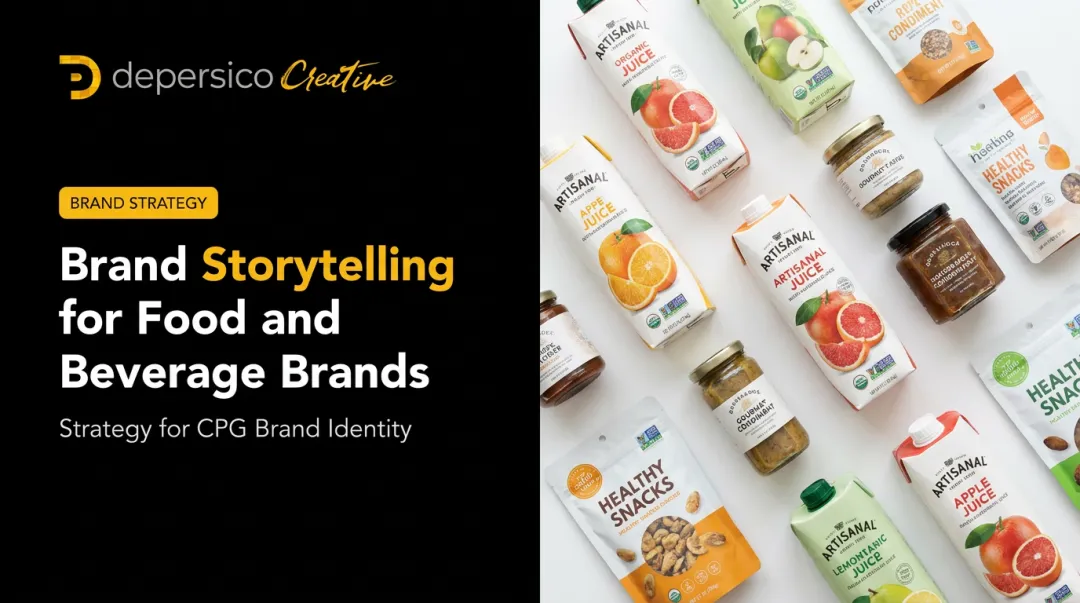
Product packaging isn't a container — it's the primary brand collateral. It functions simultaneously as advertising, salesperson, and shelf ambassador, and it has seconds to do all three jobs.
Effective F&B packaging communicates across several layers at once:
- Logo and brand mark — immediately recognizable, ownable, and scaled to work at shelf distance
- Color palette — chosen to evoke appetite, signal category, or differentiate from competitors' dominant colors
- Typography — conveys brand personality (artisanal, bold, premium, playful) before a word is read consciously
- Product photography or illustration that triggers appetite appeal and product cravings
- On-pack copy: flavor callouts, claims, taglines, and descriptive language that compels the shopper to pick it up
That last element — copy — is often underestimated. The deliberate selection of words and phrases on pack can be the difference between a product that gets picked up and one that gets passed over. DePersico Creative calls this practice creative linguistics: identifying the most effective, compelling words and phrases that quickly create a strong appeal and connection with the product.
Their packaging work for J. Skinner® Baking put this into practice with names like "Wildly Pecan Danish" and "Heavenly Cheese Danish," supported by copy like "100 layers of authentic Danish" — language engineered to trigger craving, not just describe a product. Following that rebrand, J. Skinner saw 210–340% branded sales growth.

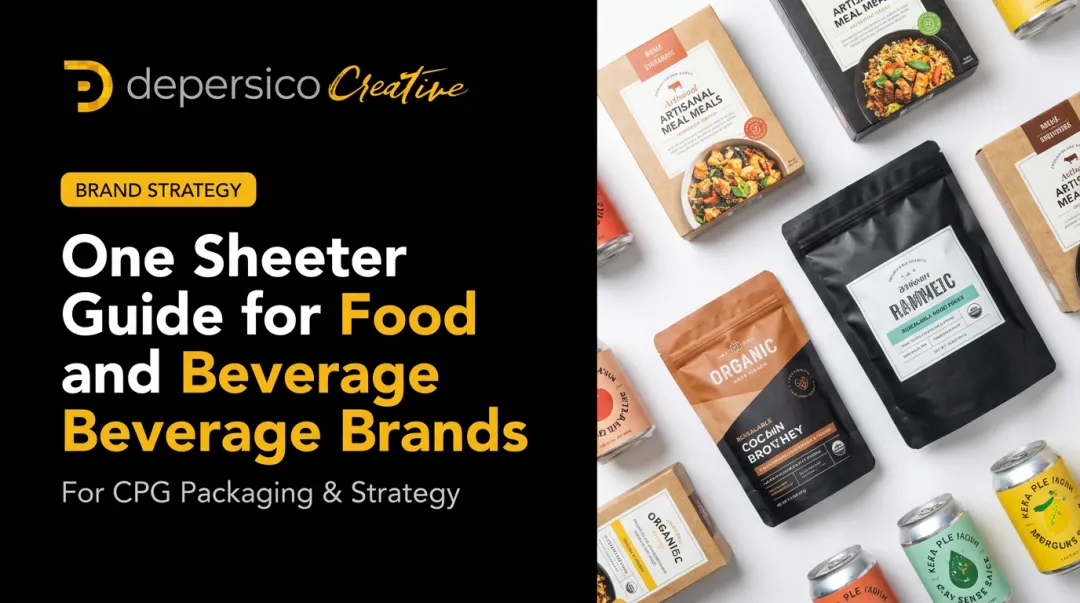
Multi-SKU brands face an additional challenge: packaging must be consistent enough to build family brand recognition across flavors, sizes, and formats, while differentiated enough for shoppers to quickly find the specific variety they want. A deliberate parent brand + variant architecture solves this — shared structure and color blocking with flavor or format differentiation layered in.
Professional Food Photography
Food photography is a high-return brand collateral investment because the same images work across packaging, websites, social media, e-commerce listings, trade presentations, and print ads. One strong shoot generates assets across every channel.
The cost of inadequate photography is measurable. In e-commerce, imagery is the only sensory substitute for tasting the product — yet NIQ's audit of 40 leading U.S. retailers found 40% of product pages displayed two or fewer images, undermining the confidence shoppers need to click "add to cart." Weak food photography signals the product probably doesn't taste as good as it should.
DePersico Creative operates a fully equipped test kitchen and studio specifically for food styling and photography, ensuring imagery is both appetite-triggering and on-brand from the start.
Digital Brand Collateral
Digital collateral has moved from supplementary to foundational, particularly for:
- Branded websites — critical for DTC brands and for retail discovery; many consumers research a product online after seeing it in-store, and vice versa
- Social media templates — consistent visual identity across platforms where recipe content, UGC, and product posts live
- E-commerce product listings — high-quality imagery, on-brand copy, and readable nutrition information are all required elements; NIQ found roughly 23% of retailers were missing ingredient statements on more than half their product pages
Digital presence also functions as pre-sales collateral. Buyers research brands online before agreeing to meetings, which means a polished website and strong social presence contribute directly to retail pipeline.
Retail and Trade Marketing Materials
Retail and trade collateral extend a brand's visual identity into the selling environment:
- Shelf talkers and price callout cards — draw shopper attention at the moment of decision
- Point-of-sale displays — branded display units that create a brand moment in the aisle
- Trade show booth graphics and banners — brand presence at industry events like Fancy Food Show or PLMA
- Sell sheets — one-page brand and product summaries for buyer presentations, with competitive data, distribution info, and key claims
For new and emerging brands without established shelf recognition, sampling event materials — table displays, branded serving items, signage — are critical for driving first trial. DePersico Creative's work for J. Skinner® included point-of-sale advertising with "bright colors, snappy copy, and irresistible product photos" designed specifically to encourage in-store trial.
How to Build Consistent Brand Collateral Across Your Product Line
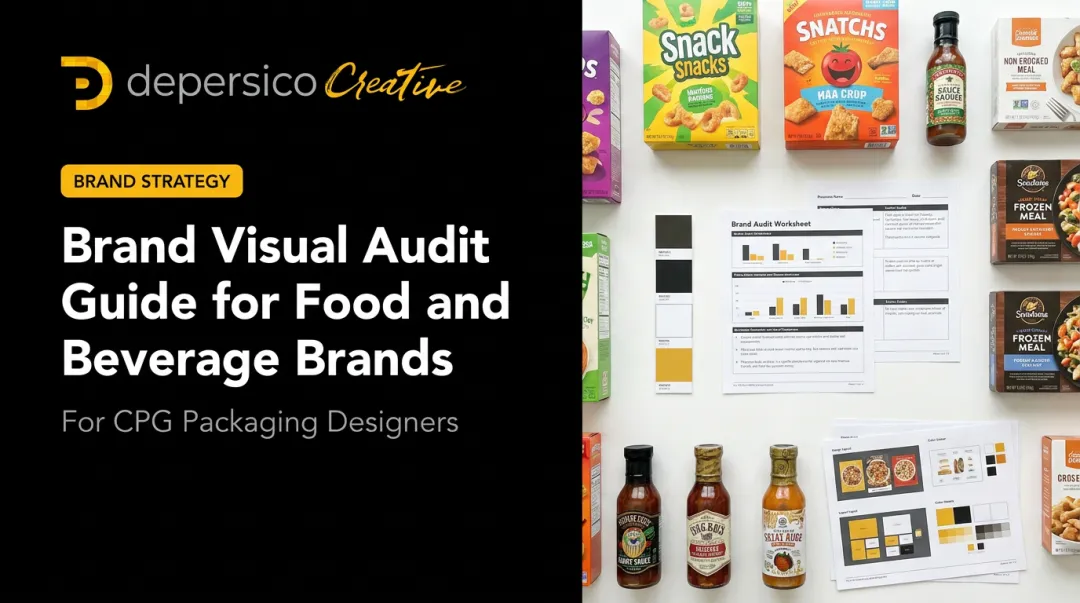
Start with a Brand Style Guide
A brand style guide is the operational foundation for consistent collateral. It documents:
- Approved logo versions and clear space rules
- Color palette with exact PMS, CMYK, RGB, and hex values
- Typography hierarchy (primary and secondary typefaces)
- Photography style direction (lighting, mood, composition)
- Tone of voice and language guidelines
Without this document, every designer, printer, and in-house marketer makes their own calls. Those small deviations compound quickly — and by the time the inconsistency is visible on shelf, it's already spread across digital and trade channels too.
Manage Multi-SKU Lines with a Parent + Variant System
For brands with multiple SKUs or sub-brands, the most effective approach uses a shared visual architecture with controlled differentiation:
- Consistent elements across the line: logo position, brand color block, typographic style, layout structure
- Differentiating elements per SKU: flavor color accent, product photography, variant name callout
This approach allows shoppers to identify the brand instantly from a distance (brand blocking) while navigating to the specific variety they want up close. DePersico Creative's Idahoan® Steakhouse™ work illustrates this: consistent brand architecture across a potato product line that helped grow casserole segment market share from 11.6% to 23.1%.

Audit Regularly
Collateral decays. Packaging gets updated, claims change, branding refreshes happen — but older assets often persist in the wild, creating consumer confusion.
Schedule a collateral audit:
- After any packaging refresh or reformulation
- After new SKU launches
- After retailer resets
- Every 1–2 years as standard practice
Retire outdated assets promptly. A mismatched sell sheet at a trade show or an outdated package photo on a retailer's website signals to buyers that the brand isn't managed tightly — and that perception is hard to walk back.
Best Practices for Developing Effective Food and Beverage Brand Collateral
Lead with Strategy, Not Design
Strong design on the wrong positioning won't move product. Before developing or refreshing any collateral, nail down:
- Who the target consumer is and what drives their purchase decisions in your category
- What the competitive shelf set looks like and where the visual whitespace is
- What the brand's unique positioning is and how collateral should express it
DePersico Creative's SWIFI (Strengths, Weaknesses, and Ideas For Improvement) visual perception assessment builds this foundation directly — evaluating how a brand's current collateral performs in-market before any design work begins.
Test Packaging in Realistic Shelf Conditions
Once strategy is locked, test it in context — not in isolation. A design that pops on a white background can vanish entirely against competitive products in an actual store aisle.
Recommended approaches include:
- Print at actual scale and view alongside competitive SKUs on a physical shelf mock-up
- Evaluate under realistic retail lighting, which varies significantly from studio conditions
- Use virtual shelf simulation tools like Ipsos Simstore for early-stage 2D, 3D, and 360-degree screening before committing to physical production
NIQ recommends pairing eye-tracking (which identifies what attracts visual attention) with behavioral and association measures for a complete picture. Attention alone doesn't confirm that shoppers interpret or respond to a design correctly.
Work with F&B-Specific Partners
Designing food packaging requires knowledge that general design agencies typically don't have:
- FDA labeling requirements — Nutrition Facts panel layout, ingredient declaration order, allergen callouts (including sesame, which became the ninth major allergen in January 2023), and net quantity placement all have regulatory specifications that can't be guessed
- Flexible packaging substrates — bleed, distortion, seam placement, and color behavior vary by substrate and converting process; the Flexible Packaging Association reported $41.5B in U.S. flexible packaging sales in 2022, with food representing roughly 50% of shipments
- Appetite appeal — knowing what triggers a craving versus what merely depicts a product comes from years working in the food category, not general design experience
Prioritize Collateral by Sales Channel
Not every brand needs every type of collateral equally. Allocate investment based on where your consumers make decisions:
| Primary Channel | Priority Collateral |
|---|---|
| Retail grocery | Packaging, POS materials, food photography |
| Direct-to-consumer | Website, digital assets, e-commerce imagery |
| Foodservice | Trade presentations, sell sheets, brand decks |
| Multi-channel | All of the above, with packaging as the foundation |

Frequently Asked Questions
What is brand collateral?
Brand collateral is the complete set of physical and digital materials used to represent a brand's identity — including packaging, photography, social media graphics, and sales materials. These assets work together to build consistent recognition and trust with consumers across every channel and interaction.
What is an example of brand collateral for a food or beverage brand?
Product packaging is the most prominent example for F&B brands. But collateral also includes branded sell sheets, trade show banners, social media templates, food photography, and point-of-sale shelf displays, all of which extend the brand's visual identity into different selling environments.
What is the most important brand collateral for a food or beverage brand?
For most F&B brands sold at retail, product packaging is by far the most critical piece. It's the first, and often only, thing a shopper interacts with before making a purchase decision, making it both the brand's billboard and its primary salesperson on shelf.
How does packaging design function as brand collateral?
Packaging communicates brand identity, product benefits, and appetite appeal simultaneously, using color, typography, imagery, and copy to create an emotional connection and compel a first purchase within seconds. In retail, there's no salesperson to explain the product — the package has to do that work on its own.
How often should a food and beverage brand update its brand collateral?
Key collateral should be reviewed whenever the brand repositions, launches new SKUs, or loses shelf performance. A full collateral audit every 1-2 years is a sound practice to ensure all materials reflect current branding, accurate product claims, and relevant market positioning.
What is the difference between brand collateral and marketing collateral?
Brand collateral encompasses all materials that express a brand's identity over time: packaging, photography, brand guidelines. Marketing collateral refers to materials designed to drive a specific sales action — promotional flyers, coupons, campaign ads. For F&B brands, the two overlap most visibly on packaging and POS materials, where brand identity and sales activation happen simultaneously.