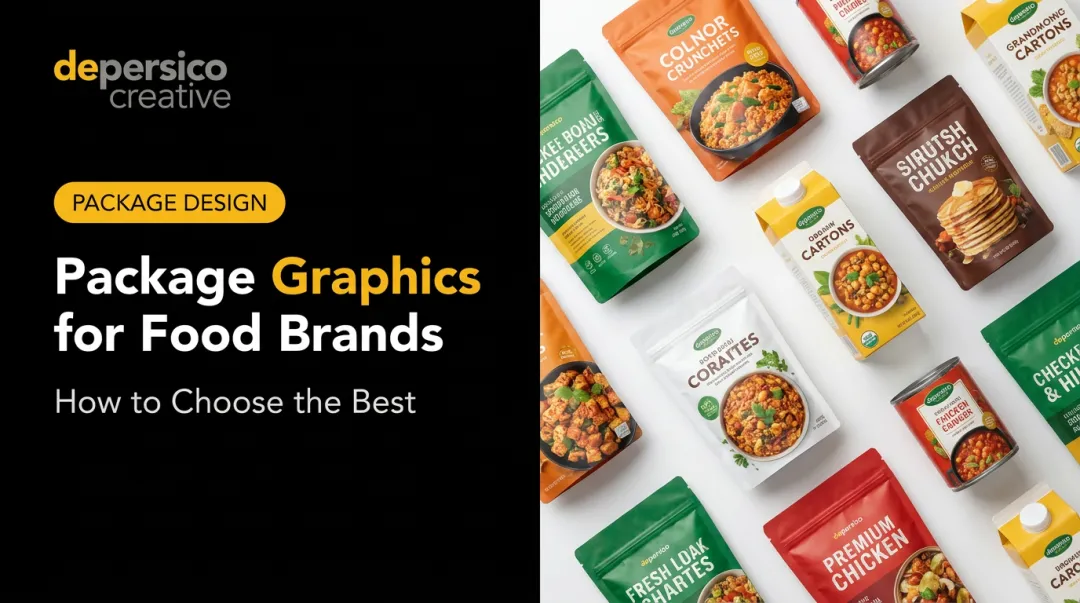
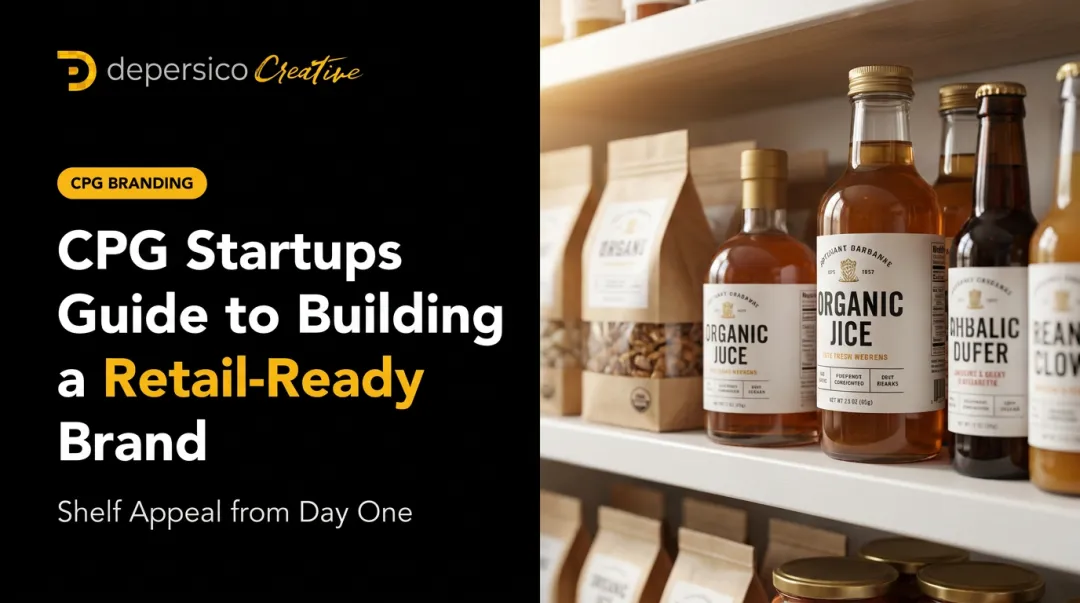
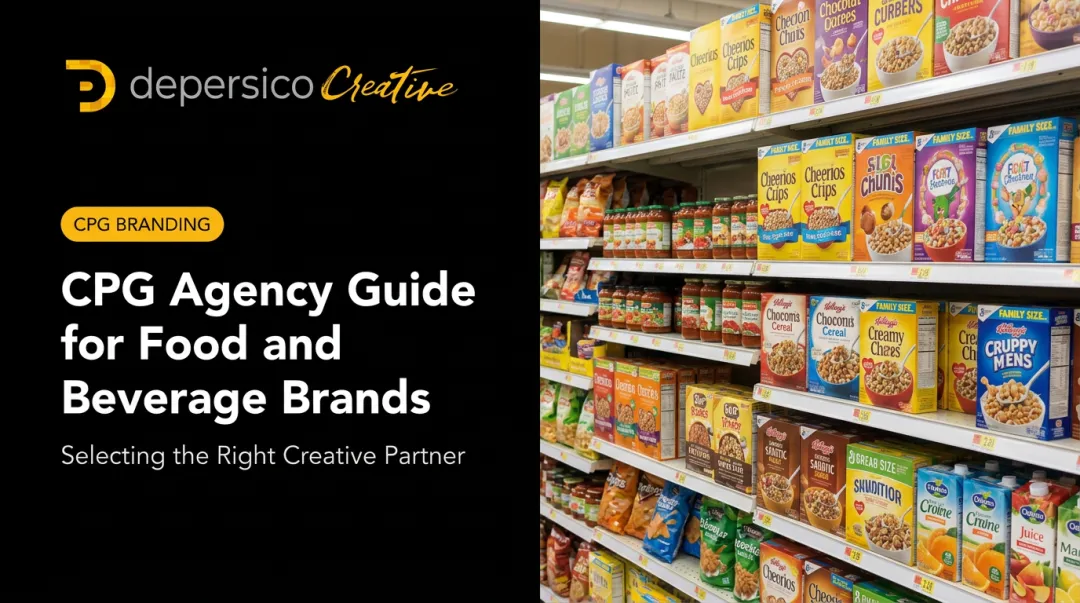
NIQ's retail shelf research found that shoppers make in-store selections in under six seconds. Meanwhile, the average US supermarket now carries 33,248 items, according to FMI's 2025 Food Industry Facts report. Your product is one voice in a very loud room.
For food and beverage brands, packaging is the silent salesperson standing on that shelf. It works around the clock, and it never gets a lunch break.
This guide covers what CPG packaging design actually means, the elements that make it work, why it drives real business growth, the process behind a successful redesign, current trends, and how to pick a design partner that understands your category.
Key Takeaways
- Packaging works as a strategic sales tool that drives purchase decisions at the shelf
- Winning designs blend brand identity, compliant labeling, durable materials, and sharp messaging
- Shelf-ready packaging shapes both first-time purchases and repeat buying habits
- A structured design process, from research to testing, lowers risk before launch
- An agency with food and beverage-specific expertise accelerates launch timelines and reduces risk
What Is CPG Packaging Design?
CPG stands for consumer packaged goods, the everyday items people buy, use up, and repurchase again and again. Think food, beverages, personal care, and household products. These aren't big-ticket purchases people research for weeks. They're grabbed off shelves in seconds, often out of habit.
CPG packaging design is the discipline of shaping how those products look, feel, and communicate at the point of purchase. It's the physical embodiment of a brand's identity and the vehicle for legally required product information.
It's also a marketing tool, one that has to perform on a crowded supermarket shelf and as a tiny thumbnail on a phone screen.
That dual duty is new pressure most brands didn't face a decade ago.
Examples of CPG Products and Categories
Common CPG categories in the food and beverage space include:
- Snacks and chips
- Frozen foods and entrées
- Condiments and sauces
- Dairy products
- Bottled and canned beverages
- Shelf-stable pantry staples like soups and seasonings
National names like Kellogg's, Campbell's, and McCormick built decades of shelf recognition in exactly these categories. Their packaging has to work just as hard as a scrappy new startup's, only at a much bigger scale.
Key Elements of Effective CPG Packaging Design
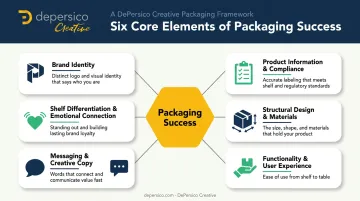
Strong packaging succeeds when several elements reinforce each other, not because any single piece is done well.
Brand Identity
Consistent logo placement, color palette, and typography build recognition over time, so a shopper can spot your product from six feet away without reading a word. Color choice isn't decorative either.
A 2024 peer-reviewed study of over 200 participants found warm colors boosted purchase intent for indulgent foods, while cool colors did the same for foods marketed as healthier options. Color communicates before copy does.
Product Information & Compliance
Ingredient lists, net quantity, allergen disclosures, and legal disclaimers aren't optional extras. The FDA requires specific declarations on packaged food, including a statement of identity, manufacturer information, and clear labeling for the nine major allergens (sesame joined the list in January 2023). Getting this wrong turns a design flaw into a compliance risk.
Structural Design & Materials
Materials need to protect the product through shipping and shelf life while meeting rising sustainability expectations. Durability and recyclability now count as baseline requirements, not competing goals.
Functionality & User Experience
Small usability wins drive repeat purchases. Heinz's inverted "Easy Squeeze" ketchup bottle, launched in 2002, solved a decades-old annoyance: no more shaking, no more mess. Resealable bags and portion-control packs work the same way. They make the product easier to live with.
Messaging & Creative Copy
Word choice on-pack has to do heavy lifting in a tiny space. For food and beverage products especially, language cueing freshness, flavor, and craveability creates an instant connection before a shopper even reads the ingredient panel.
Shelf Differentiation & Emotional Connection
RXBAR's 2015 redesign stripped down the logo and put the ingredient list front and center. That single move helped push it to the number-three wellness bar position at natural retailers like Whole Foods. Distinctive visual design paired with honest storytelling catches the eye and builds trust before the first bite.
Why CPG Packaging Design Matters for Business Growth
Packaging is one of the most powerful, and most overlooked, growth levers a brand has.
First Impressions Drive Sales
That six-second decision window mentioned earlier decides whether a sale happens at all. If your packaging hasn't communicated who you are and why you're worth buying in that window, the sale is already gone.
Standing Out in a Saturated Market
With over 33,000 items competing for attention in a typical supermarket, blending in is the same as being invisible. Differentiation determines whether a product ends up in the cart or gets passed over on the shelf.
Building Brand Loyalty & Repeat Purchases
Packaging that's functional and emotionally resonant keeps customers coming back. A resealable bag that actually reseals, or a bottle that pours without dripping, builds trust every time it's used.
Securing Retail Partnerships
Retailers are getting pickier, and Walmart's Secondary Packaging Supply Chain Standards now apply to all new and existing items, covering marking, handling, and transit testing. Sustainability guidance from major retailers, while often voluntary, increasingly shapes what makes it onto their shelves at all.
Measurable Business Impact
DePersico Creative's redesign of Idahoan's Steakhouse™ line is a clear example of what's possible. The original packaging was plain and text-heavy, and it disappeared into the potato aisle. The redesign added restaurant-quality food photography, warm color palettes, and sharper messaging around the steakhouse experience. The results:
- 75% incremental sales increase for the casserole segment
- Market share grew from 11.6% to 23.1%
- A Better Homes and Gardens Best New Product Award, voted on by more than 80,000 consumers
Results like these show what happens when packaging strategy gets the same rigor as a marketing campaign.
The CPG Packaging Design Process: From Strategy to Shelf
A structured process reduces guesswork and protects your launch budget. Here's how it typically unfolds:
- Brand & category research: Analyze competitors, category conventions, and the retail environment, often through a structured SWIFI review (Strengths, Weaknesses, Ideas for Improvement), before any design work starts. Skipping this step means designing blind.
- Define positioning & target shopper: Identify who's actually buying, how they shop, and what they need to see in those first few seconds.
- Creative concept development: Bring structure, color, imagery, and messaging together into initial concepts, usually several directions to compare.
- Shelf & placement considerations: Eye-level placement calls for different priorities than a bottom-shelf spot, where top-of-pack messaging matters more.
- Consumer testing & validation: Purchase-intent testing catches problems before they're printed on 50,000 units.
- Production & launch: Final pre-press, compliance checks, and print-readiness steps close out the process before packaging hits the shelf.
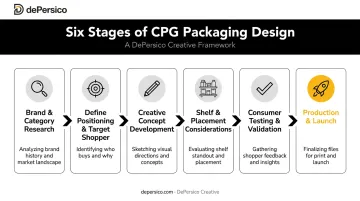
Each step reduces risk at the next one. Skip research, and your positioning is a guess. Skip testing, and your production run is a gamble.
CPG Packaging Trends and Choosing the Right Design Partner
Trends Shaping CPG Packaging Design Today
Three trends are reshaping shelves right now:
- Sustainable materials: In McKinsey's March 2025 US survey, 77% of consumers rated recyclability as extremely or very important to sustainable packaging, with 62% saying the same about recycled content.
- Smart & interactive packaging: QR codes linking to sourcing information, recipes, or sustainability details are becoming common. Mondelez Italia's GS1-powered pilot connects Oro Saiwa shoppers to batch, expiry, and disposal details right from the pack.
- Minimalism & bold simplicity: A 2023 study across eight experiments with nearly 2,000 participants found visually simple packaging boosted perceived brand authenticity, which in turn drove actual purchase choice over cluttered competitors.
Choosing the Right CPG Packaging Design Partner
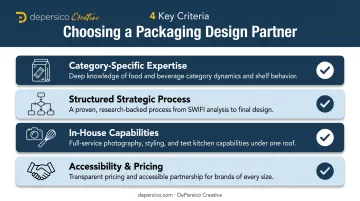
Staying ahead of these trends requires a partner who lives in the food and beverage category, not one dabbling in it part-time. Not every design agency understands this space—here's what to look for:
- Category-specific expertise: A generalist agency might nail a logo but miss why appetite appeal and food photography matter so much. DePersico Creative has focused exclusively on food and beverage packaging since 1977, working with brands ranging from startups to Kellogg's, Campbell's, and McCormick.
- A structured strategic process: A methodology like DePersico's SWIFI assessment (Strengths, Weaknesses, and Ideas For Improvement) identifies exactly where current packaging is falling short before a single new concept gets sketched.
- In-house capabilities: Partners with in-house photography studios and test kitchens speed up production and cut down on juggling multiple outside vendors.
- Accessibility and pricing: Direct access to senior decision-makers—not a rotating cast of account managers—matters, as does project-based pricing that fits both scrappy startups and established national brands.
Frequently Asked Questions
What is CPG in packaging?
CPG stands for consumer packaged goods, everyday items like food and beverages that get used up and repurchased often. Packaging for CPG products has to protect the item while also acting as a marketing tool at the point of sale.
What is an example of a CPG?
Common CPG examples include cereal, canned soup, snack bars, frozen entrées, and bottled beverages. These are all products consumers buy repeatedly and replace as they run out.
How much does CPG packaging design typically cost?
Cost varies widely based on project scope, number of SKUs, and whether the work includes photography or strategy work alongside design. DePersico Creative, for example, uses a project-based pricing model that scales for both startups and established national brands, keeping the process accessible regardless of company size.
How long does the CPG packaging design process take?
Timelines vary by project complexity, but a full process from research through production typically spans several months. Consumer testing rounds and revision cycles can extend the timeline depending on how many iterations are needed.
How is food and beverage packaging design different from other CPG packaging?
Food and beverage packaging carries extra weight around appetite appeal, freshness cues, and food photography, since taste and quality have to be communicated visually. It also faces stricter regulatory requirements around ingredient lists, allergens, and nutrition labeling.
Should I hire an agency or design CPG packaging in-house?
A specialized agency brings category expertise, testing experience, and in-house resources like DePersico Creative's test kitchen and photography studio, which would be costly to replicate internally. Building an in-house team offers more day-to-day control but requires significant investment in specialized talent and equipment.