Introduction
A shopper moving through a grocery aisle makes a decision about your product in seconds — often before they've read a single word on the package. That moment of visual contact is your brand's first and sometimes only chance to create a craving. Miss it, and they move on.
This guide covers everything CPG brands need to know about food and lifestyle photography: what distinguishes the two types, why both function as active selling tools, and what separates effective shots from forgettable ones. It also walks through how to plan a shoot that delivers assets across every channel your brand touches.
Whether you're launching a new product or refreshing an established line, the photography decisions you make now will shape how shoppers perceive your brand on shelf and online.
Key Takeaways
- Food photography spotlights the product; lifestyle photography places it inside a human story to drive emotional connection
- Strong photography functions as a silent salesperson — communicating quality before a word is read
- Each channel — packaging, Amazon, social media, digital ads — demands a distinct photographic approach
- Most successful CPG brands need both photography types working together, not one or the other
- Professional, food-specific photography consistently delivers one of the strongest ROI returns a CPG brand can make
Food Photography vs. Lifestyle Photography: What CPG Brands Need to Know
These two categories get used interchangeably in briefs and agency conversations, but they serve distinct strategic purposes. Understanding the difference before you budget or brief a shoot saves real money and prevents misaligned deliverables.
Food Photography: The Product as Hero
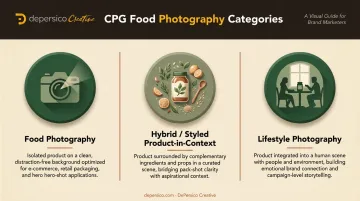
Food photography in the CPG context means the product or prepared dish is the primary subject — isolated, styled, and lit to maximize appetite appeal and brand recognition. This is what lives on your front panel, your Amazon main image, and your wholesale catalog.
The goal is straightforward: make the product look as delicious and trustworthy as possible. Every element in the frame exists to serve the product. Common executions include:
- A close-up bowl of cereal that showcases texture, color, and portion size
- A sauce jar with a drizzle of its contents alongside it
- A snack package with product spilling onto a clean surface
Lifestyle Photography: The Product in a Story
Lifestyle photography places the product inside a real-life scene. A parent pouring juice at a breakfast table. Friends passing a snack bowl at a tailgate. Hands slicing bread with a branded condiment nearby. The product is present, but the scene is the point — and the consumer is meant to see themselves inside it.
This is where emotional connection happens. When a brand consistently shows its products in aspirational, relatable moments, it builds a lifestyle identity consumers want to associate with — one that turns first-time buyers into repeat purchasers.
One misconception to clear up: lifestyle photography is not candid or improvised. These shots are meticulously planned, styled, and staged — they just convey naturalness. Budget and brief accordingly, because the production requirements are just as demanding as studio product photography.
The Hybrid Category: Styled Product-in-Context
Most CPG brands don't have to choose strictly between the two. A third type sits between them, and it's extremely common on packaging and e-commerce listings. The packaging is the clear focal point, but fresh ingredients, props, or serving suggestions surround it — hinting at a broader story without committing to a full scene.
Think of a pasta sauce jar photographed with fresh tomatoes, basil, and a wooden spoon nearby — no people, no scene, but clearly more than an isolated product shot. This approach works particularly well on front panels and secondary Amazon listing images because it communicates product quality and versatility without the full production investment of a lifestyle shoot.
Why Food and Lifestyle Photography Are Selling Tools for CPG Brands
Photography isn't a cosmetic decision — it's a commercial one. POPAI's grocery channel research found that 76% of purchase decisions are made in-store, meaning the package itself — and the photography on it — is doing the selling. No ad, no sales pitch, no influencer post is present at that moment. Just your packaging and a shopper who's already moving toward the next product.
Photography and Appetite Appeal
A well-executed food photograph communicates freshness, quality, and flavor faster than any claim on your label. It triggers appetite and creates desire before rational evaluation begins. Poor or generic photography signals low quality regardless of how good the product actually is — shoppers don't distinguish between "bad photo, great product." They move on.
At DePersico Creative, appetite photography is a core strategic tool — not a secondary deliverable. The tagline Create Cravings. Inspire Trial. captures exactly what effective food photography must do.
The J. Skinner® Baking rebrand puts real numbers to that idea: precise shifts in imagery, hierarchy, and claim presentation contributed to 210–340% sales growth following a comprehensive brand and packaging redesign.
Lifestyle Photography and Brand Identity
Beyond individual products, lifestyle imagery builds a brand persona. When a brand consistently appears in aspirational, relatable scenes, consumers begin to associate those feelings with the product itself. Common high-performing contexts include:
- The healthy morning routine
- The weekend gathering with friends or family
- The effortless weeknight dinner
- On-the-go snacking and active lifestyle moments
Research from Meta found that Instagram ads featuring a creator and product outperformed standard brand ads for brand favorability with 81% confidence across beauty, food, and beverage categories. While that's not a clean lifestyle-versus-product-only test, it confirms that human presence and social context in food imagery drive stronger emotional response.
The Digital Amplification Factor
On e-commerce platforms, lifestyle imagery earns its keep in secondary image slots. Amazon's official seller guidelines recommend at least six additional images and one video beyond the required main product image — and explicitly include lifestyle shots among the recommended types. The main image must show the product against a white background; the supporting gallery is where context, use cases, and lifestyle scenarios belong.
NIQ confirms that enriched product content — including high-quality imagery — improves shopper confidence, discoverability, and engagement on digital shelves. For CPG brands competing in crowded e-commerce categories, that gallery isn't filler. It's your second chance to close the sale.
Key Elements of Effective CPG Food and Lifestyle Photography
Lighting
Lighting is the single most important technical variable in food photography, and the approach should match the asset's purpose.
- Natural window light creates warmth and authenticity, well-suited to lifestyle shots where a sense of spontaneity matters
- Controlled studio lighting (softboxes, barn doors, and focused directional sources) delivers the precision and consistency essential for packaging and e-commerce product shots
- Consistency across a product line matters directly; mismatched lighting across SKUs on a shelf erodes brand cohesion and recognition
DePersico Creative's studio uses both continuous studio lighting and off-camera flash with softbox modifiers, allowing the team to control direction, intensity, and quality of light for each specific food subject — whether that means conveying farm-fresh brightness or premium, restaurant-quality elegance.
Composition and Angles
The angle choice should always serve what the brand wants to emphasize:
- Overhead (flat lay): Best for ingredients, table spreads, and texture-forward products like granola, grain bowls, or charcuterie boards
- Eye-level: Ideal for packaging shots, beverage pours, and action sequences where the product's form matters
- 45-degree angle: The workhorse of lifestyle CPG photography — captures both the product and its surrounding context, giving the viewer a naturalistic view of the scene
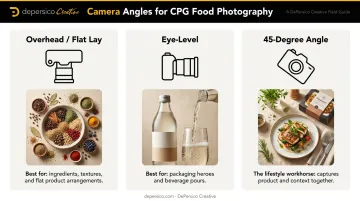
Mixing angles across a shoot gives the brand a versatile library without requiring multiple separate sessions.
Food Styling and Props
Food styling is what separates an appetizing image from a clinical one. Deliberate imperfections (a sauce drip, a herb dusting, a slight asymmetry in plating) make food look freshly prepared rather than assembled for a photograph.
Props reinforce brand personality:
- Rustic wood boards, linen napkins, mason jars for artisan, natural, or farm-brand positioning
- Clean white ceramics, marble surfaces, bright botanicals for premium or health-focused brands
- Warm cast-iron, bold color accents, casual tableware for comfort food or family-oriented brands
One caution: avoid overcrowding the frame. Props should complement the food, not compete with it. If the viewer's eye has to hunt for the product, the shot has failed its commercial purpose.
Color, Mood, and Brand Consistency
The color palette and overall mood of your photography library should align directly with your brand's visual identity — not just the product category.
Consider how two brands occupy opposite ends of the spectrum:
- Health-focused snack brand: Bright, clean light with fresh greens throughout every image
- Comfort food brand: Warm, low-key amber tones that evoke home-cooked familiarity
Research on packaging color and purchase intention found that when visual cues align with the food's character, purchase intention increases. That principle extends from packaging directly into the photography surrounding it.
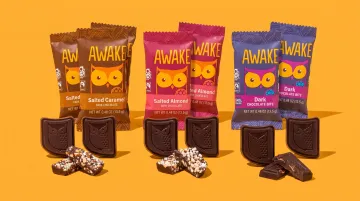
For CPG brands with multiple SKUs, color inconsistency across a photography library directly erodes brand recognition. Shoppers learn to recognize a brand by its visual signature; if that signature shifts across products or channels, brand blocking on shelf becomes harder to achieve.
When to Use Product Photography vs. Lifestyle Photography
The most useful mental model: product photography establishes recognition and trust, while lifestyle photography creates desire and connection. Neither replaces the other.
| Channel | Recommended Photography Type |
|---|---|
| Front-panel packaging | Product/food photography |
| Amazon main listing image | Product on white background (required) |
| Amazon secondary gallery | Styled product-in-context + lifestyle |
| Wholesale / retail catalogs | Product photography |
| Social media feeds | Lifestyle photography |
| Digital advertising creative | Lifestyle or hybrid |
| Brand website | Mix of both |
| PR and press materials | Lifestyle photography |
| In-store secondary displays | Lifestyle or hybrid |
For new product launches or brand refreshes, commissioning both types in a single production session is far more efficient than building a library piece by piece. A complete photography library from the outset also ensures visual consistency across all touchpoints. Retrofitting that consistency later — after assets have been created at different times by different vendors — is rarely cost-effective and almost never seamless.
How to Plan a Food Photography Shoot for Your CPG Brand
Pre-Shoot Preparation
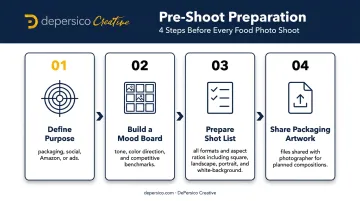
Getting the brief right before anyone enters the studio prevents wasted shoot time and misaligned assets. Key preparation steps:
- Define the primary purpose first — packaging, social, advertising, or Amazon listings each have different composition and format requirements. This determines styling direction before anything else
- Build a mood board capturing desired tone, color direction, and two or three competitive benchmarks showing what "right" looks like in your category
- Prepare a shot list that accounts for all required formats and aspect ratios — square for Instagram, landscape for web banners, portrait for shelf displays, white-background for Amazon main images
- Share packaging artwork files with the photographer in advance so compositions can be planned around label placement and brand elements
Shoot Day
A productive CPG shoot day is structured around priorities, not improvisation:
- Hero shots first — capture the primary campaign image when energy and styling are freshest
- Maintain backup product and ingredients on hand; food degrades under studio lights faster than most brand teams expect
- Build in review time on set before moving to the next setup — catching a composition problem live is less costly than reshooting
- Work from your shot list but leave room for one or two exploratory setups that might yield unexpected assets
Why Integrated Partners Matter
Coordinating a separate photographer, food stylist, prop stylist, and brand strategist across four vendors introduces compounding points of failure: misread briefs, inconsistent styling direction, and assets that don't match brand guidelines.
DePersico Creative's all-in-house model is built to eliminate that burden entirely. Every discipline — brand analysis, creative linguistics, food styling, and professional photography — operates from the same studio, with a fully equipped test kitchen on-site. That means:
- Brand strategy and shoot direction come from the same team
- Styling decisions reflect the brand's actual positioning, not a vendor's interpretation
- Assets arrive ready to deploy, not in need of realignment
The team that understands your brand's strategy is the same team styling and shooting your product. That consistency is visible in the final work.
Frequently Asked Questions
What are examples of lifestyle photography?
Lifestyle photography places the product inside a real human moment rather than isolating it as the sole subject. CPG-relevant examples include: a parent pouring branded juice at a family breakfast table, friends passing a branded snack bowl at a tailgate, hands slicing bread with a branded condiment in the foreground, or a holiday table setting featuring a branded side dish prominently.
What is the difference between food photography and lifestyle photography?
Food photography isolates the product as the hero of the image, maximizing appetite appeal and brand recognition — it's the standard for packaging and product listings. Lifestyle photography embeds the product in a relatable scene to build emotional connection. Each serves a different stage of the consumer journey, and a complete CPG visual strategy needs both.
Do I need professional food photography for my CPG product packaging?
Yes. Packaging photography directly influences purchase decisions made within seconds on shelf, and low-quality imagery signals low-quality product regardless of what's inside. Professional food photography — especially from specialists who understand CPG branding — pays for itself by protecting the brand impression that drives trial and repeat purchase.
How do I prepare my product for a food photography shoot?
Bring multiple units in perfect condition — clean labels, undented packaging. Prepare any serving suggestions or recipe applications in advance, align key ingredients and props with your brand guidelines, and share packaging artwork files with the photographer before the shoot so compositions can be planned accurately.
What props and styling elements work best for CPG food photography?
Choose props that reinforce your brand's personality and target consumer lifestyle. Rustic wood and linen suit artisan or natural brands; clean marble and bright ceramics work for premium or health-positioned products. Props should complement the food without pulling the viewer's eye away from the product itself.
How often should CPG brands refresh their food photography?
Refresh when packaging updates, a new line launches, you're entering a new channel, or existing imagery no longer fits your brand positioning. For active brands, every two to three years is a reasonable baseline. Any major packaging redesign should trigger a full photography reset.