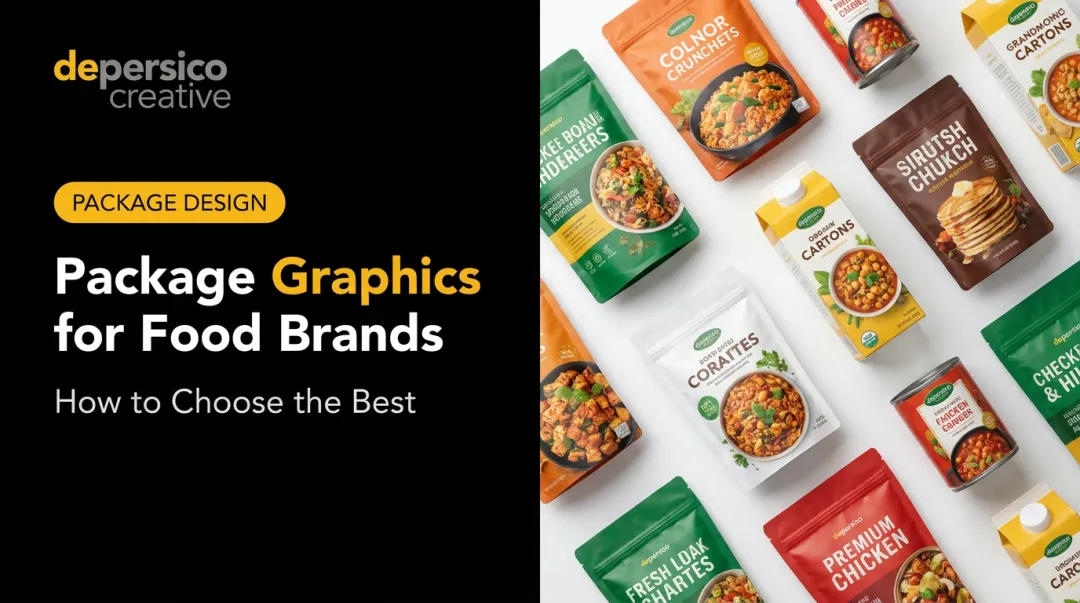
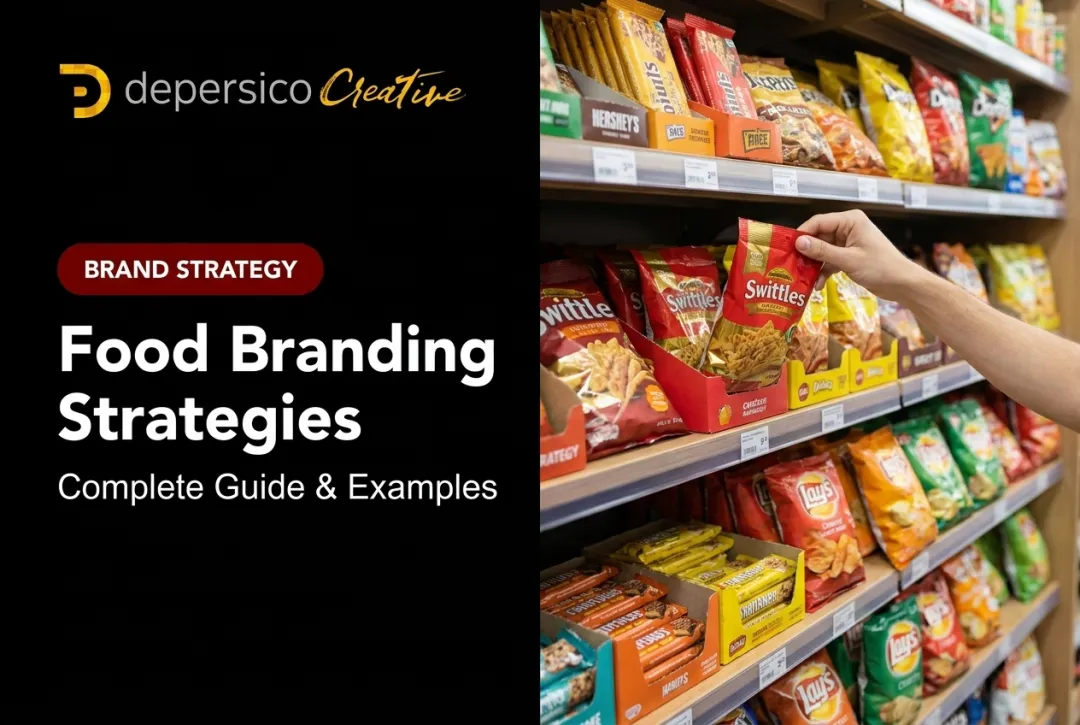
Most food brands pour significant resources into product development, sourcing, and quality. Packaging and branding often get what's left over. That gap is exactly where market share disappears — not because the product fails, but because the packaging never gave it a chance.
This article covers what strong branding and packaging actually do for food brands, the real consequences of getting it wrong, and how to close the gap between product quality and shelf performance.
Key Takeaways
- Strong food branding builds recognition and drives repeat purchase through consistent, compounding touchpoints.
- Packaging is a sales tool first — it must communicate quality and trigger purchase intent before a shopper moves on.
- 72% of U.S. adults say packaging design influences their purchase decisions, per a 2018 Ipsos survey.
- Misaligned branding and packaging erodes consumer trust and hands sales to competitors — including private-label alternatives.
What Branding and Packaging Actually Mean for Food Brands
These two terms get used interchangeably, but they do different jobs.
Branding is the total identity of a food product — its name, visual system, tone, and the emotional associations it creates in a shopper's mind before they've ever tasted it. It's the answer to: Why should I trust this product?
Packaging is the physical and visual vehicle that expresses that identity at the point of sale. It's what a shopper sees, picks up, and reads when standing in the aisle. It answers: Why should I buy this right now?
Neither is a creative exercise alone — both are strategic business tools with measurable commercial consequences. Branding establishes consumer trust; packaging converts that trust into a purchase decision. When the two are misaligned, the result is consumer confusion and lost sales. Common misalignment problems include:
- Inconsistent visual languages between brand identity and packaging
- Messaging on pack that contradicts the brand's positioning
- Packaging that undersells the quality of what's inside
For food brands specifically, this distinction matters because the shelf is where the sale is won or lost. No sales rep walks the aisle. No ad plays overhead. The package does all the work — in about four seconds.
Key Advantages of Strong Branding and Packaging for Food Brands
Advantage 1: Immediate Shelf Differentiation in a Crowded Marketplace
Shelf differentiation isn't about looking attractive — it's about stopping a shopper who had no intention of stopping.
With over 33,000 items in a typical supermarket, every product is fighting for fractions of attention. Strong packaging design creates an interruption — a visual break in the pattern that pulls the eye and holds it long enough to generate interest. That interruption comes from deliberate choices:
- Color that contrasts with the category norm rather than blending into it
- Typography that signals brand personality and quality tier at a glance
- Imagery that creates appetite appeal and communicates the product experience
- Structure and hierarchy that guide the shopper's eye to the most persuasive information first

None of this is accidental. The brands that own shelf presence make these decisions intentionally, based on what's actually happening across the competitive set — not in isolation.
The commercial stakes are real. According to a 2018 Ipsos survey of 2,002 U.S. adults, 72% said packaging design often influences their purchase decisions. For a brand whose packaging blends into the category, that influence works against them — every time a competitor's package earns the stop, it's a lost opportunity to generate trial.
This advantage is most acute in three situations:
- New product launches entering an established category with entrenched competitors
- Brands seeking retail placement with major grocery chains, where buyers evaluate shelf appeal before they evaluate the product
- Brands with plateauing sales despite strong product quality — where packaging is the undiagnosed problem
Advantage 2: Building Consumer Trust, Recognition, and Long-Term Loyalty
Recognition is not the same as awareness. A shopper who vaguely remembers a brand is not the same as a shopper who immediately identifies it and reaches for it. Building the latter requires consistency — the same colors, logo, typography, tone, and benefit language repeated across every product, every format, and every touchpoint over time.
That consistency is what converts a first-time buyer into a repeat customer — because shoppers return to brands they recognize and trust.
Packaging plays a direct role in signaling trustworthiness before a product is ever tasted. Specific design cues communicate quality:
- Professional food photography that shows the product honestly and appetizingly
- Clean, legible ingredient and benefit language that reflects transparency
- A visual design quality that matches — or exceeds — the product's actual quality tier
- Consistent brand architecture across the product line so every SKU reinforces the others
This matters most when competing against private-label alternatives. U.S. store-brand sales reached $282.8 billion in 2025, capturing 21.3% dollar share and 23.5% unit share, according to PLMA and Circana data. Private-label quality has also improved considerably — NIQ research from late 2024 found 68% of global consumers view store brands as good alternatives to name brands.

In that environment, a branded food product's packaging is often the only meaningful differentiator a consumer can assess before purchase. A brand that looks generic will be evaluated as generic — and priced accordingly.
Advantage 3: Driving Purchase Decisions and Directly Impacting Revenue
At the moment of decision — with no salesperson, no sample, and no prior brand experience — the package carries the entire commercial argument. It must:
- Create appetite appeal that makes the product feel worth trying
- Communicate the core value proposition clearly and quickly
- Distinguish the brand from the products immediately surrounding it
- Provide enough information to resolve hesitation without overwhelming the shopper
The visual design handles part of this work. But the words on the package — what DePersico Creative calls creative linguistics — carry significant weight too. Benefit-forward language, appetite-triggering descriptors, and precise phrasing that speaks to the target consumer's motivations are as strategically important as any design element.
When packaging gets this right, it drives measurable commercial outcomes. GoodPop, named grand-prize winner in Designalytics' 2022 Effectiveness Awards, saw sales rise 40% year-over-year following a packaging redesign — an outcome evaluated through both marketplace sales performance and quantitative consumer testing. While no single-variable causation can be established from the available data, the association is substantive and the evaluation rigorous.
This pressure is heaviest for food brands introducing new products to consumers with no prior brand experience. In that scenario, packaging and branding bear the entire burden of communicating why this product is worth the risk. A great product inside forgettable packaging doesn't get the chance to prove itself — the shopper has already moved on.
What Happens When Food Brands Ignore Branding and Packaging
Weak branding doesn't just look bad — it costs money. The damage shows up in slowing velocity, lost shelf placements, and a deepening dependence on promotions to move product.
Across DePersico Creative's 45+ years of working with food brands — from kitchen-table startups to national CPG portfolios — certain failure patterns appear consistently:
Products are mistaken for lower-quality alternatives. When packaging fails to signal premium quality, consumers price the product accordingly. The brand loses the ability to hold its price point and becomes reliant on discounting to move units. McKinsey research found that 72% of U.S. CPG promotions lose money — a cycle that's difficult to exit once it begins.
Inconsistent visual identity prevents brand equity from compounding. Each new SKU or product launch that doesn't connect visually to the family brand starts from zero recognition. The cumulative investment in brand building resets instead of accumulating.
Consider what happens during a buyer review: Grocery buyers evaluate packaging as a proxy for brand professionalism and consumer readiness. DePersico's experience shows that buyers often decline shelf placement without explicitly citing packaging — citing "limited space" or "not the right fit" instead. The packaging was the real issue, and the brand never gets a direct explanation.
Trial stays low even when the product is excellent. Poor appetite appeal, unclear benefit communication, and a generic visual identity all suppress first-time purchase. Without trial, there is no repeat purchase, no word-of-mouth, and no compounding brand loyalty.
How to Get the Most Value from Your Food Brand's Branding and Packaging
The brands that consistently outperform on shelf treat branding and packaging as ongoing strategic assets — not one-time design projects. Here's what that looks like in practice:
Diagnose before designing. Start with a structured evaluation of what's working and what isn't. DePersico Creative's SWIFI process — Strengths, Weaknesses, and Ideas For Improvement — surfaces diagnostic insight before any design work begins, so the problem is clearly defined before it's solved.
Design for the shopper, not the brand. The most effective packaging is built around what triggers purchase behavior in your specific target consumer — their motivations, hesitations, and the emotional and functional needs they're satisfying. Packaging that speaks to those needs outperforms packaging that simply describes the product.
Invest in professional food photography. Photography isn't decoration — it's a primary appetite trigger and quality signal on the package. Food photography needs to be developed alongside the packaging design, not added as an afterthought.
Build a unified product line identity. Color systems, typography, logo treatment, and visual hierarchy should create a consistent family appearance across every SKU. Each product reinforces the others, and the entire line benefits from every consumer touchpoint.
Assess regularly, not reactively. The shelf environment shifts. Competitors launch. Consumer preferences evolve. A packaging system that was competitive three years ago may now be invisible in a category that has moved around it. Regular evaluation keeps packaging effective.

Conclusion
For food brands, branding and packaging are commercial decisions with direct consequences on shelf performance, trial rates, consumer loyalty, and revenue. A great product in weak packaging is a compounding loss. Every day a brand goes unnoticed on shelf is a day a competitor earns the purchase instead.
The advantage of treating branding and packaging as a continuous strategic practice isn't theoretical. It's the difference between brands that build recognition and loyalty over time and brands that stay perpetually dependent on promotions to generate movement.
The product quality is already there. The real question is whether the packaging communicates it clearly enough — in the four to six seconds a shopper spends deciding what goes in the cart.
Frequently Asked Questions
What are the main advantages of branding?
Strong branding builds immediate recognition, creates emotional connection with consumers, and supports premium pricing by establishing a perception of quality and trust. Each new product launch benefits from the equity that consistent branding has built — meaning the returns grow with every touchpoint.
What are the main benefits of packaging?
Packaging protects the product, creates shelf impact and differentiation in a crowded retail environment, and communicates key quality signals and product benefits at the point of purchase. For food brands specifically, it functions as the primary sales tool — the last persuasive touchpoint before a consumer decides whether to buy.
What are the 3 C's of branding?
The 3 C's break down as follows:
- Clarity — the brand must be immediately understandable to its target consumer
- Consistency — the same identity must appear across every product, format, and touchpoint
- Connection — branding must create emotional resonance beyond functional product attributes
How does packaging design affect food sales?
Packaging design directly influences whether a shopper stops, engages, and purchases. Research shows that 76% of grocery purchase decisions are finalized in-store (POPAI, 2012), making the package one of the highest-leverage sales tools a food brand has — operating at the exact moment a consumer decides whether to buy.
What elements make food packaging effective?
Effective food packaging typically includes:
- Appetite-triggering visuals and professional food photography
- Clear, benefit-forward language that speaks to the consumer's need
- A consistent brand color palette and logo system
- Accurate product information presented cleanly
- A visual identity that stands apart from competitors on the same shelf
How often should a food brand redesign its packaging?
No fixed schedule applies here. A redesign is warranted when sales are underperforming despite strong product quality, when the brand is entering new retail channels, when a shelf audit shows the packaging has stopped differentiating, or when retailer feedback signals the current design isn't connecting with shoppers.