Introduction
You have a product a buyer should care about. The problem is, category managers at mid-size distributors routinely review 50 or more SKUs in a single week. Your window is measured in seconds, not minutes. That's where a one sheeter earns its place.
In food and beverage, a one sheeter (also called a sell sheet) is the document that does the selling when you're not in the room. It travels to distributor offices, lands on category manager desks, and sits in trade show bags long after the booth conversation ends.
A well-built one sheeter converts interest into a follow-up meeting. A weak one gets binned before the buyer reaches the second line.
This guide covers everything F&B brands need to know: what a one sheeter is, what to include, how to design it for trade buyers, and when to deploy it for maximum impact.
Key Takeaways
- A one sheeter is a single-page trade document — not a company overview — built to convince buyers and distributors that a specific product belongs on their shelf.
- F&B one sheeters must lead with appetite appeal, not copy. The product photo does more work here than anywhere else.
- Essential elements include hero photography, brand positioning, product specs, certifications, pricing, and a clear call-to-action.
- One sheeters work across trade shows, broker packets, pitch meetings, and digital follow-up — all from a single page.
What Is a One Sheeter?
A one sheeter — also called a sell sheet or marketing one-pager — is a single-page document that summarizes a product for a specific audience. In food and beverage, that audience is almost always a trade buyer: a grocery retailer, distributor, or foodservice operator evaluating whether your product fits their assortment.
One Sheeter vs. Business One-Pager: Not the Same Thing
A general business one-pager gives a company overview — team, mission, metrics, investment opportunity. It's built for investors or strategic partners who want to understand the business.
An F&B one sheeter is product-specific and trade-focused. It answers one question: Why should this product be on my shelf? Trade buyers aren't thinking about your company story. They're thinking about:
- Category fit — does this fill a gap in their assortment?
- Margin — does the math work for them?
- Consumer demand — is there a market for this?
- Logistics — can they actually stock and sell it?
CPG and natural food buyers use "sell sheet" and "one sheeter" interchangeably. Either term signals you understand the trade.
Today, a well-executed one sheeter is a standard expectation in distributor submissions and retail pitch meetings — not a nice-to-have, but a baseline credential.
Why Food and Beverage Brands Need a One Sheeter
NielsenIQ reported that approximately 30,000 new CPG products launch annually in the U.S. — and only 30% sustain or grow their sales from year one to year two. That's a crowded market where most products fail to gain traction. A one sheeter doesn't guarantee placement, but showing up to a buyer meeting without one guarantees a shorter conversation.
At Trade Shows, It's Your Leave-Behind
Events like Natural Products Expo West and the Summer Fancy Food Show — which draws 9,000+ buyer attendees and 2,500+ exhibiting companies — are high-stakes for emerging brands. After a booth conversation, most buyers won't remember the details of every product they sampled. Your one sheeter is what survives the show floor.
Worth noting for 2024 planning: Natural Products Expo East ended in 2023 and has since been replaced by Newtopia Now in Denver — verify show status before committing booth spend.
In Pitch Meetings, It Pre-Sells the Product
Most scheduled retailer pitch meetings run around 10 minutes. A well-structured one sheeter lets a buyer absorb your product's story, benefits, and key specs before the conversation even starts — giving you more time to discuss fit and next steps rather than explaining what the product is.
For Startups, the ROI Is Hard to Match
For an early-stage F&B brand with limited marketing budget, a professionally designed one sheeter is typically the highest-ROI sales tool available. A single page serves three jobs at once:
- Introduces the brand and its story
- Presents the product's key specs and differentiators
- Makes the sales argument before you say a word
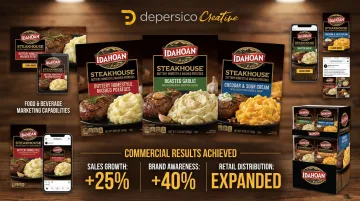
DePersico Creative's work with Idahoan's Steakhouse™ launch included sell sheets as part of an integrated marketing package that contributed to a 75% incremental sales increase for casseroles and grew casserole segment share from 11.6% to 23.1%. The sell sheet wasn't doing that work alone — it was part of a complete commercial system. That system logic applies at any brand scale.
For Established Brands, Consistent Messaging Across Every Channel
When a brand launches a new SKU or line extension, the sell sheet keeps brokers, distributors, and the internal sales team presenting the product consistently. Without it, messaging drifts. With it, every channel partner is working from the same story.
What to Include in a Food and Beverage One Sheeter
UNFI's UpNext program makes the buyer's information needs explicit: applicants are asked to submit price lists, sell sheets, and supporting documents that include GS1-certified UPC status, case pack, unit size, case weight, SRP, certifications, and shelf life. That list is a practical blueprint for what belongs on your one sheeter.
Brand Identity Elements
Lead with your logo, brand name, and tagline. Beneath that, include a short positioning statement — one or two sentences that tell a buyer who you are and what your brand stands for. This is where word choice carries real weight.
DePersico Creative's Creative Linguistics approach, developed by James DePersico, is built around finding the specific language that creates appetite appeal and emotional connection quickly. The goal isn't "great taste" — it's the precise flavor, texture, or experience that sets your product apart from the six others in the same category on the buyer's desk.
Hero Product Photography
That positioning language needs a visual partner. The product photo is the first thing a buyer sees, and it determines whether they keep reading. Use a styled, appetite-appealing shot that communicates the eating or drinking experience — not just the package sitting on a white background.
Low-quality images signal an unfinished brand, regardless of how good the product actually is. The gap between client-shot and professionally shot food photography is visible immediately — buyers make that judgment before they read a single word. DePersico Creative operates a fully equipped in-house test kitchen and studio for exactly this reason.
Product Details and SKU Information
Include:
- Product name(s) and variants
- Pack sizes and case counts
- UPC codes (GS1-certified)
- Shelf life and storage temperature
- Gross case weight
This is the operational data buyers need to evaluate logistics and place an order. Omit it, and they move on to the next brand on the stack.
Key Selling Points and Certifications
Use 3–5 bullet points to highlight what makes the product stand out:
- Flavor profile or texture (specific, not generic)
- Clean label attributes
- Certifications: organic, Non-GMO Project Verified, kosher, gluten-free
- On-trend positioning: plant-based, high-protein, low-sugar
- Awards, press recognition, or notable retail velocity
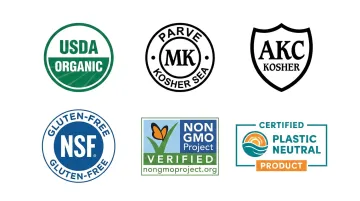
An IFIC survey of 3,000 U.S. adults found 52% considered knowing whether food is bioengineered important to their purchase decisions. Certifications signal to buyers that consumer demand already exists — list only what you've earned, and be specific about it.
Pricing and Availability
- Wholesale pricing or suggested retail price (SRP)
- Margin information if you're pitching direct-to-retail
- Minimum order quantities and lead times
- Current distribution territory and store count
Buyers assess category fit and commercial viability in the first pass. If they can't find SRP and availability, the conversation stalls.
Contact Information and Call-to-Action
End with a specific, friction-free next step:
- Brand website
- Sales or broker contact name, email, and phone
- CTA: "Request samples," "Schedule a line review," or "Visit us at Booth #XXX"
The CTA tells the buyer exactly what to do next. Don't make them guess.
How to Design a Food and Beverage One Sheeter That Gets Noticed
Lead with the Product, Not the Copy
In food and beverage, the product photo should occupy the largest visual real estate on the page. A buyer's eye goes to the image first — if the image doesn't trigger appetite appeal, the copy doesn't get read. This is the opposite of a services one-pager, where a headline might lead. Here, the product earns the attention.
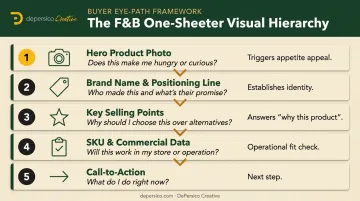
DePersico Creative's visual hierarchy framework sequences the buyer's eye through a deliberate path: product photo → brand name and positioning line → key selling points → SKU and commercial data → call-to-action. Each zone answers a different buyer question, in the order it gets asked.
Match Your Packaging Identity
The one sheeter should feel like an extension of your product packaging — same colors, typography, and visual language. A buyer who encounters your product at a trade show and then receives your sell sheet via email should experience immediate recognition.
This consistency isn't purely aesthetic. It's a credibility signal: it communicates shelf-readiness. DePersico Creative builds packaging design around this kind of brand cohesion, so the sell sheet reinforces the shelf impression rather than contradicting it.
Use Scannable Layout
Grocery buyers skim. Design for that reality:
- Short headlines, not paragraph labels
- Bullet points for benefits and certifications
- Icons for certification seals (organic, Non-GMO, gluten-free)
- Visual hierarchy that guides the eye without demanding effort
Dense paragraphs and cluttered layouts force the reader to work. If the buyer has to hunt for SRP or the product name, the layout has failed.
Keep Copy Tight and Specific
Every word on the page must earn its place. "Rich, slow-roasted flavor with a smoky finish" beats "great taste" every time. It's specific, sensory, and memorable. Generic claims blend into the background. Specific language creates appetite appeal.
When and Where to Use Your F&B One Sheeter
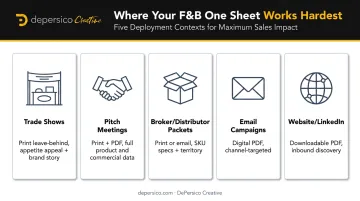
A single well-designed one sheeter can work across multiple contexts with minimal adaptation:
| Context | Format | Primary Focus |
|---|---|---|
| Trade shows (Expo West, Fancy Food Show) | Print leave-behind | Appetite appeal + brand story |
| Retailer pitch meetings | Print + digital PDF | Full product and commercial data |
| Broker/distributor outreach packets | Print or email PDF | SKU specs + territory availability |
| Email campaigns to regional accounts | Digital PDF attachment | Targeted to specific channel |
| Brand website or LinkedIn | Downloadable PDF | Discovery and inbound leads |
Adapt for Different Audiences
One template, two versions. A sell sheet for a retail buyer should emphasize margin, velocity data, and distribution history. A version for a foodservice operator should lean into consumer trend positioning and menu application. The core visual design stays consistent; only the data emphasis changes between versions.
Digital Distribution Considerations
Digital-first trade relationships are now standard across retail channels — from virtual category reviews to email-based product discovery. Keep a lightweight PDF ready for virtual submissions and follow-up.
Practical rules for digital distribution:
- Optimize for both screen viewing and print (buyers do both)
- Keep file size manageable for email (under 5MB)
- A QR code linking to current specs or a sample request page adds utility — but the essential buying data must remain visible on the page itself, not hidden behind a link
Frequently Asked Questions
What is a one-sheet in marketing?
A one-sheet is a single-page marketing document that summarizes a product, brand, or service for a specific audience. In food and beverage, it functions as a concise sales tool designed to generate interest and prompt a clear next step — typically a meeting, sample request, or purchase inquiry.
Is it one-sheet or one sheeter?
Both are correct and used interchangeably. In food and beverage and CPG marketing, "sell sheet" is equally common and often preferred in trade contexts — all three refer to the same single-page sales document.
What should a food and beverage one sheeter include?
The essentials: brand logo and tagline, hero product photography, key benefits and certifications, SKU and pack specs (UPC, case count, shelf life), SRP and availability, and contact information with a specific call-to-action.
When should a food brand use a one sheeter?
Use one whenever you're actively selling into a new account or channel:
- Trade shows (before and during)
- Retailer or distributor pitch meetings
- New broker onboarding
- Email outreach to prospective accounts
- Website downloads for inbound buyer inquiries
How is an F&B one sheeter different from a general business one-pager?
A general one-pager covers the business — team, metrics, mission — for investors or partners. An F&B one sheeter is product-specific and trade-focused, built to convince buyers and distributors that a specific SKU will sell in their channel.
How long should a food brand one sheeter be?
Exactly one page. Front and back is acceptable when complex spec needs require it. If your content doesn't fit on one page, the messaging needs editing — not the format expanding.